
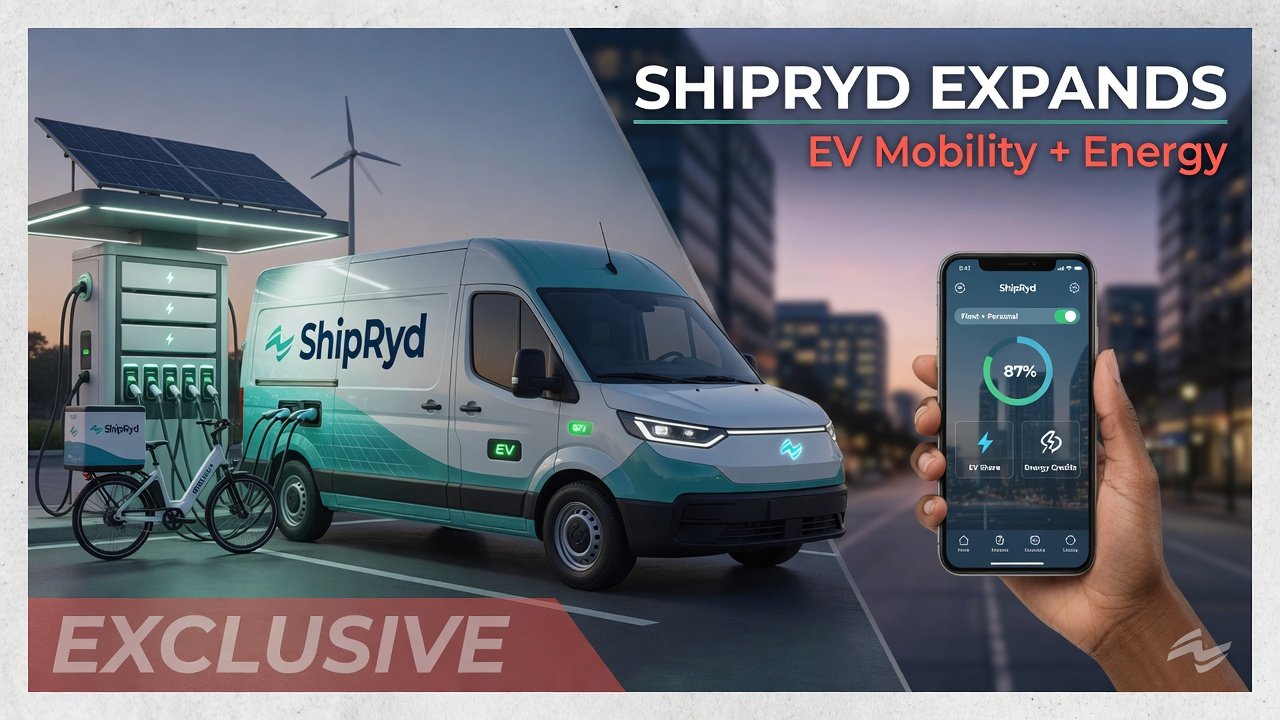
ShipRyd Expands Beyond Commercial Fleets With Integrated EV Mobility and Energy Ecosystem
ShipRyd EV mobility and energy ecosystem plans mark a significant expansion of the company’s business focus beyond its existing commercial fleet operations. The company has announced plans to develop an integrated platform covering electric mobility and energy-related services.
The strategy reflects the broader shift toward connected electric mobility, where vehicle operations, charging infrastructure, energy management and digital services are increasingly being developed as interconnected parts of the transportation ecosystem.
ShipRyd Broadens Its EV Mobility Strategy
ShipRyd has traditionally focused on commercial fleet operations, serving businesses and transportation requirements through fleet-related solutions.
The company’s latest plans broaden that focus toward a more comprehensive EV mobility and energy ecosystem. Instead of concentrating only on vehicle operations, ShipRyd aims to connect multiple parts of the electric mobility value chain.
Such an approach can potentially bring together electric vehicles, charging infrastructure, energy management and mobility services within a single operating framework.
The expansion comes as businesses and fleet operators increasingly evaluate electrification as a way to transition away from conventional internal-combustion vehicles.
Building an Integrated EV Ecosystem
The concept behind ShipRyd’s strategy is to create an integrated ecosystem rather than operate individual EV services in isolation.
An integrated platform can connect vehicles with charging and energy infrastructure while using operational data to manage fleet performance.
For commercial operators, this type of integration can be particularly relevant because electric fleets require different operational planning compared with conventional vehicles.
Charging schedules, vehicle utilization, battery performance and energy consumption all become important components of fleet management.
ShipRyd’s planned ecosystem is intended to address these areas through a broader mobility and energy platform.
From Fleet Operations to Energy Services
The move into energy represents a broader opportunity within the EV sector.
Electric vehicles effectively connect transportation with the electricity system. Fleet operators require reliable charging infrastructure, while charging demand creates new requirements for energy management and infrastructure planning.
By expanding into the energy side of the EV ecosystem, ShipRyd could position its operations around both mobility and the infrastructure needed to support electric transportation.
This could include areas such as charging solutions, energy management and other services supporting the operation of electric vehicles.
Why Commercial Fleets Are Important to EV Adoption
Commercial fleets are an important segment of the electric vehicle market because vehicles often operate for long periods and follow predictable routes.
Fleet operators can therefore evaluate EVs based on factors such as vehicle utilization, energy consumption, charging requirements and operating costs.
However, electrifying commercial fleets also introduces challenges. Companies need access to suitable charging infrastructure and must plan vehicle deployment around charging availability.
An integrated approach combining mobility and energy services could help address some of these operational requirements.
Technology at the Center of the Strategy
Digital technology is expected to play an important role in ShipRyd’s expanded business model.
Fleet-management platforms can collect information about vehicle locations, utilization, battery status and charging activity. Combining these datasets with energy-management systems can provide operators with a more comprehensive view of their electric fleets.
Data-driven fleet operations can also help companies monitor vehicle performance and plan charging more efficiently.
As EV adoption increases, the ability to connect mobility data with energy infrastructure could become increasingly important for fleet operators.
Potential Benefits for Fleet Operators
ShipRyd’s proposed EV mobility and energy ecosystem could offer businesses a more connected approach to electric fleet management.
Potential areas of value include:
- Electric fleet management
- EV charging solutions
- Energy management
- Vehicle utilization monitoring
- Charging optimization
- Fleet electrification support
- Integrated mobility services
- Data-driven operational planning
The actual services and capabilities available through the ecosystem will depend on how ShipRyd develops and implements its expansion strategy.
The Broader EV Market
The move comes as the electric mobility industry continues to evolve beyond the sale of electric vehicles.
EV adoption increasingly involves an interconnected network of vehicle manufacturers, fleet operators, charging providers, energy companies, software platforms and infrastructure developers.
This has created opportunities for businesses that can combine multiple services into a single platform.
ShipRyd’s expansion into an integrated mobility and energy model places the company within this broader development of the EV industry.
What Comes Next for ShipRyd
The next phase of ShipRyd’s strategy will involve developing the infrastructure, technology and partnerships required to support its broader ecosystem.
Moving beyond commercial fleet operations into integrated EV mobility and energy services represents a substantial expansion of the company’s business scope.
As the company develops the model, factors such as charging availability, technology integration, energy management and customer adoption will be important to its implementation.
The planned expansion positions ShipRyd around a wider part of the electric mobility value chain, connecting commercial transportation with the energy infrastructure required to support electrification.
Frequently Asked Questions
What is ShipRyd planning to build?
ShipRyd plans to build an integrated EV mobility and energy ecosystem that expands its business beyond commercial fleet operations.
What does an EV mobility and energy ecosystem include?
An integrated EV ecosystem can connect electric vehicles, charging infrastructure, energy management, fleet operations and digital mobility services.
Why is ShipRyd expanding beyond commercial fleets?
The expansion allows ShipRyd to address a broader portion of the electric mobility value chain by combining fleet operations with mobility and energy-related services.
Why is energy important for electric vehicles?
Electric vehicles depend on charging infrastructure and electricity availability. Energy management therefore plays an important role in operating and scaling EV fleets.
How could the strategy benefit commercial fleet operators?
A connected platform could help fleet operators manage vehicles, charging, energy consumption and operational data through integrated services.
What is the focus of ShipRyd’s new strategy?
The focus is on developing a broader ShipRyd EV mobility and energy ecosystem that connects transportation and energy services as part of the company’s expansion beyond traditional commercial fleet operations.
