
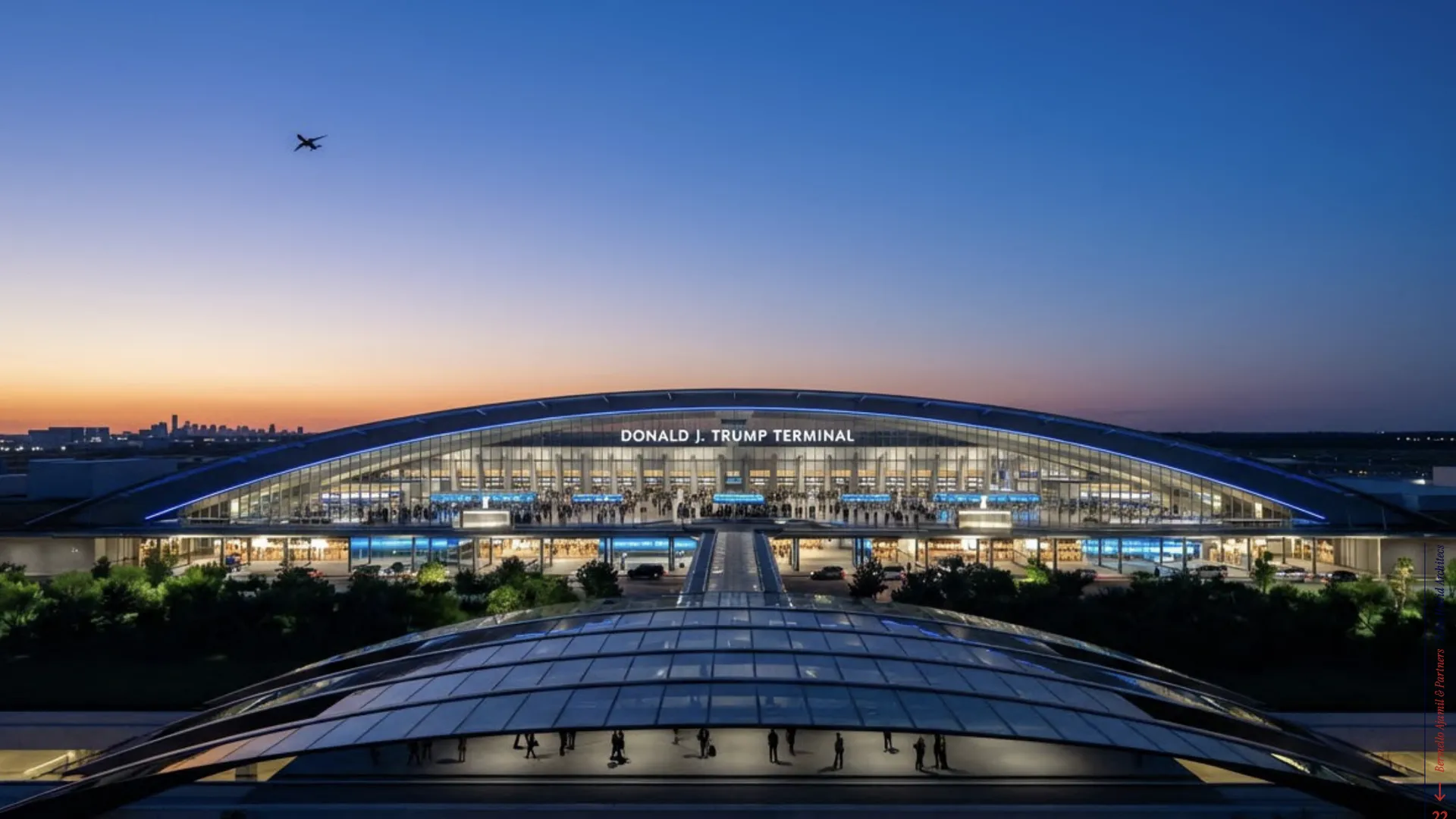
Washington Dulles International Airport was conceived in the years following World War II, at a moment when commercial aviation was rapidly entering the jet age. Built in Virginia to serve the nation’s capital, Dulles became the first airport specifically designed for commercial jet aircraft and quickly established itself as one of the most important aviation hubs in the world.
Today, it remains a vital artery for the Washington metropolitan area. According to data from the Metropolitan Washington Airports Authority, Dulles handled roughly 29 million passengers between October 2024 and October 2025—an indicator of both its significance and the growing pressure on its aging infrastructure.
As part of a broader federal push to modernize America’s air traffic control system before the end of President Donald Trump’s second term, the Department of Transportation has identified Dulles as a prime candidate for a sweeping overhaul. Federal officials are now seeking private-sector proposals to construct entirely new terminals and concourses, signaling one of the most ambitious airport revitalization efforts in decades.
Why the Trump Administration Is Targeting Dulles
Transportation Secretary Sean Duffy made the administration’s position clear in a December 2025 statement, arguing that the airport no longer reflects the stature of the capital it serves.
“Tourists, world leaders, and CEOs from around the globe shouldn’t have to pass through an inefficient airport when visiting Washington,” Duffy said. He added that Dulles needs a “complete refresh” to reclaim its role as the premier international gateway to the United States.
While pilots often praise Dulles for its long runways and reliable landing systems, the passenger experience tells a different story. More than six decades after opening, many travelers—and even former pilots—describe the airport as outdated and cumbersome.
Richard Levy, a former pilot and aviation safety expert with more than 40 years in the industry, summed it up bluntly: from the cockpit, Dulles earns top marks, but for passengers, its facilities lag far behind modern expectations. Still, Levy believes that once the planned upgrades are finished, the airport could become something truly special.
Dulles’s Role as Washington’s International Hub
Dulles was never meant to compete directly with Ronald Reagan Washington National Airport (DCA). Instead, it was designed to complement it.
DCA’s proximity to downtown Washington makes it convenient, but its short runways and limited layout severely restrict long-haul and international flights. With only one primary long runway and heavy congestion, Reagan National simply cannot handle the region’s global air traffic demands.
Dulles fills that gap. Located about 26 miles away, it boasts four active runways and more than 100 gates spread across five concourses. This design allows it to accommodate larger aircraft and far more international traffic, making it the true global gateway for the capital region.
Aviation experts note that consolidating both airports into a single mega-hub would be ideal in theory but nearly impossible in practice, given the dense development surrounding Washington and the sheer amount of land such a project would require.
The People Movers: Iconic and Infamous
One of Dulles’s most distinctive—and controversial—features is its fleet of “mobile lounges,” commonly known as people movers. These oversized vehicles were originally designed to shuttle passengers directly from the terminal to aircraft parked far from the gates, an innovative idea at the time.
Before the underground AeroTrain opened in 2010, people movers were essential for reaching all concourses. Today, they are primarily used to transport passengers to Concourse D, which is not connected to the AeroTrain system.
While nostalgic for some, the people movers have become a symbol of inefficiency. A crash in November 2025 sent 18 passengers to the hospital with non-life-threatening injuries, intensifying scrutiny of the system and reinforcing calls for modernization.
A Terminal Worth Preserving
Despite widespread criticism of Dulles’s outdated elements, one part of the airport continues to draw praise: its main terminal.
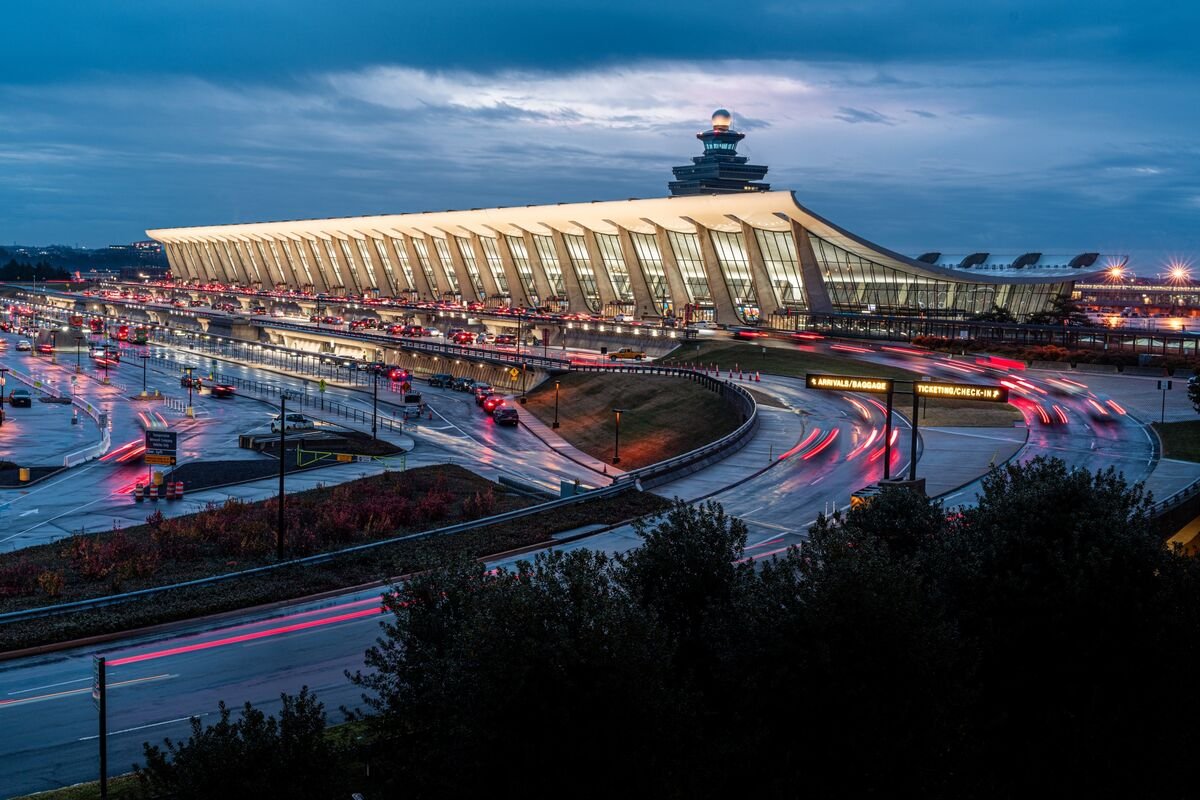
Designed by legendary architect Eero Saarinen, the terminal is widely regarded as an architectural masterpiece. President Trump himself highlighted its beauty during a December 2025 Cabinet meeting, calling Saarinen one of the greatest architects of his era and promising to make Dulles “really spectacular.”
The terminal’s sweeping roof and open design were ahead of their time. While the building has undergone expansions and interior renovations over the years, its original vision remains intact—and central to any future redevelopment plans.
Past Improvements and What’s Still to Come
Dulles has not been standing still. Between 2000 and 2011, the airport saw significant upgrades, including new parking garages, expanded concourses, a modernized international arrivals facility, and the addition of a fourth runway. The AeroTrain alone transformed how passengers move through much of the airport.
Looking ahead, two major projects were already on the books even before the Trump administration’s announcement. The first is a fifth runway—an east-west strip measuring approximately 10,500 feet—that would significantly boost flight capacity. The second is a long-awaited replacement for the temporary structures housing Concourses C and D, with plans for a modern, three-level concourse featuring 44 gates and upgraded amenities.
Federal officials have now gone a step further, inviting proposals for entirely new terminals and concourses, suggesting that the scope of change could be far larger than previously anticipated.
Space, Airspace, and Legal Challenges
When Dulles was built in the late 1950s, it sat amid open farmland. While development has since crept closer, there is still some undeveloped land—particularly near the planned fifth runway—that could support expansion.
However, airport planners face strict limitations. Safety zones around runways, restricted military airspace, and dense surrounding development all constrain where new construction can occur. Aviation experts warn that fitting new infrastructure into an already crowded footprint will be a complex puzzle.
Because the land is leased from the Department of Transportation, the federal government does have the authority to acquire additional property through eminent domain if necessary, though such moves could invite legal challenges from landowners disputing compensation.
A High-Stakes Transformation
Dulles sits as close to Washington as possible without intruding into restricted or prohibited airspace, making every expansion decision a delicate balancing act. Yet experts agree that meaningful improvements are still achievable—especially those that simplify passenger movement and reduce reliance on aging people movers.
If successful, the Trump administration’s revitalization plan could redefine Dulles for the next generation, transforming an aging but historically significant airport into a modern, world-class gateway worthy of the nation’s capital.
