
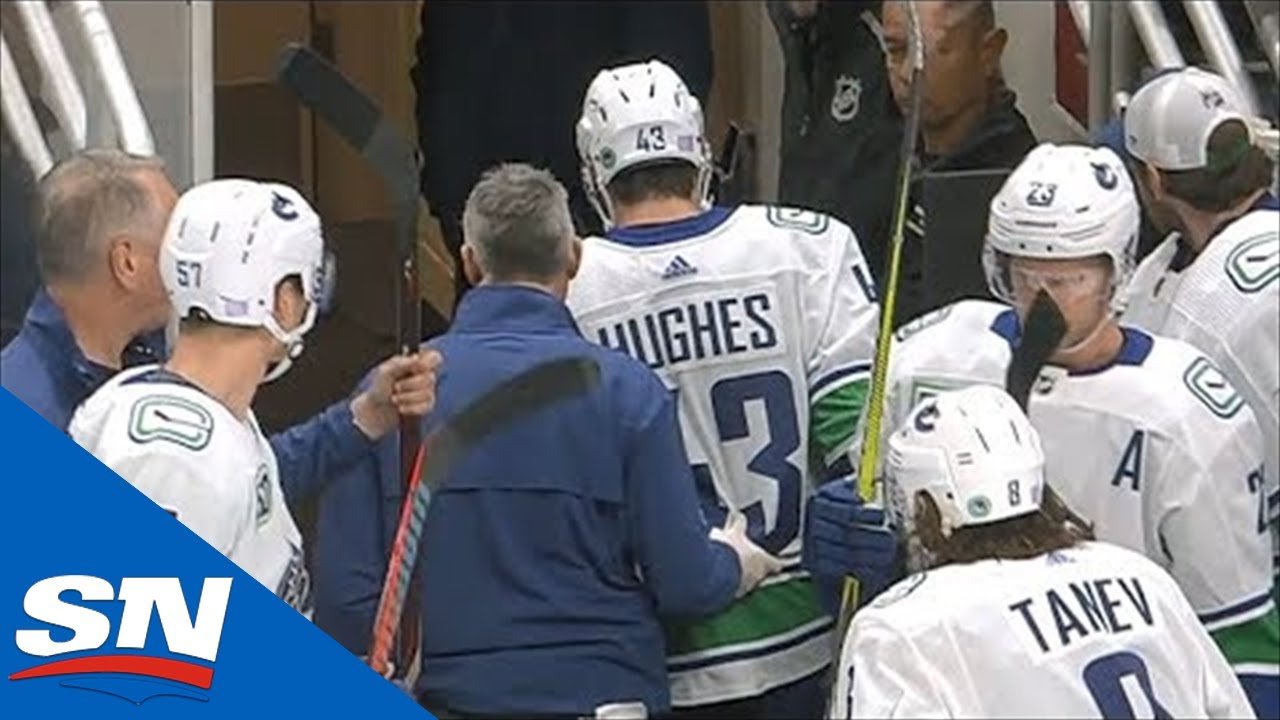
A Sudden Blow to Vancouver’s Captain
When news of the quinn hughes injury began circulating, it sent an immediate wave of concern through the Vancouver hockey community. As captain of the Vancouver Canucks and one of the NHL’s most dynamic defensemen, Quinn Hughes is not just another player on the roster — he is the engine that drives the team’s transition game, power play, and overall tempo.
For the Canucks, losing Hughes, even temporarily, creates a ripple effect that touches every part of their lineup. From defensive pairings to offensive production, the impact of the quinn hughes injury is significant and potentially season-defining.
Who Is Quinn Hughes and Why He Matters So Much



At just 24 years old, Quinn Hughes has already established himself as one of the most skilled offensive defensemen in the NHL. Known for his elite skating, puck control, and hockey IQ, Hughes consistently ranks among the league leaders in assists and power-play production for defensemen.
As captain of the Canucks, he also carries leadership responsibilities that extend beyond the ice. He sets the pace, quarterbacks the power play, and often logs heavy minutes against the opponent’s top lines. Simply put, the quinn hughes injury is not just about replacing a player — it’s about compensating for a cornerstone of the franchise.
How the Quinn Hughes Injury Impacts the Canucks’ Defense
1. Power Play Disruption
Hughes is the primary quarterback of Vancouver’s power play. His ability to walk the blue line, create passing lanes, and fake shots to open up space makes him irreplaceable in that role. Without him, the Canucks must either elevate another defenseman into a more offensive role or adjust their power-play structure entirely.
The quinn hughes injury could result in a noticeable dip in power-play efficiency, especially if the team struggles to replicate his vision and decision-making at the point.
2. Increased Pressure on Other Defensemen
With Hughes sidelined, other blue-liners must absorb additional minutes. This can lead to fatigue over time, particularly during back-to-back games or long road trips. Defensive depth becomes crucial, and any existing weaknesses may become more visible.
The absence caused by the quinn hughes injury forces Vancouver’s coaching staff to rethink matchups and defensive zone strategies.
3. Transition Game Challenges
One of Hughes’ greatest strengths is his ability to move the puck out of the defensive zone cleanly. His skating allows him to evade forecheckers and initiate quick breakouts. Without him, the Canucks may struggle with zone exits, leading to extended defensive pressure and fewer controlled entries into the offensive zone.
The Psychological Impact on the Locker Room
The quinn hughes injury affects more than just tactics — it also impacts team morale. As captain, Hughes serves as a stabilizing presence. His calm demeanor and consistent performance provide confidence to teammates.
Injuries to star players can sometimes galvanize a team, but they can also create uncertainty. The Canucks must now rally around a “next-man-up” mentality while maintaining focus in a highly competitive division.
Timeline and Recovery Expectations
Injuries in the NHL vary widely in severity. Whether the quinn hughes injury is short-term or long-term will determine how drastically Vancouver must adjust its plans.
Short-term absence:
If Hughes returns within a few games, the Canucks may only experience a minor disruption.
Long-term absence:
If the injury keeps him out for weeks or months, management might need to explore trade options or rely heavily on developing players to fill the void.
In either case, the medical and training staff will prioritize a full recovery over rushing him back. Given his importance to the franchise’s future, caution is essential.
League-Wide Reactions
The quinn hughes injury has drawn attention across the NHL. Hughes is widely respected not only in Vancouver but throughout the league. Analysts frequently mention him in conversations about Norris Trophy contenders, recognizing his elite offensive contributions from the back end.
When a player of his caliber goes down, it alters competitive balance. Opponents may view upcoming matchups against Vancouver differently, knowing the team is missing its top defenseman.
Can the Canucks Stay Competitive?
The real test now lies in how Vancouver adapts. Successful teams often demonstrate resilience in the face of adversity. Depth scoring, disciplined defensive play, and strong goaltending will become even more critical during Hughes’ absence.
Coaches may simplify systems, focusing on safer breakouts and structured defensive coverage. Forwards might need to take greater responsibility in supporting the defense, particularly during zone transitions.
If the Canucks can weather the storm created by the quinn hughes injury, it could strengthen the team’s chemistry and confidence once he returns.
The Bigger Picture: Protecting Franchise Talent
In today’s NHL, star players are the backbone of team identity and marketing appeal. Protecting them through smart minute management and conditioning programs is increasingly important. The quinn hughes injury serves as a reminder of how fragile a season can be when key players are sidelined.
For Vancouver, the long-term goal remains building a sustainable contender. That mission depends heavily on Hughes’ health and continued development as both a player and leader.
Final Thoughts
The quinn hughes injury represents a critical moment for the Vancouver Canucks. It challenges the team’s depth, leadership structure, and tactical flexibility. While injuries are an unavoidable part of professional hockey, losing a player of Hughes’ caliber is never easy.
Yet adversity often reveals a team’s true character. If Vancouver can adapt, remain disciplined, and stay competitive during his absence, they may emerge stronger — and even more dangerous — once their captain returns to full health.
For now, fans can only hope that the quinn hughes injury proves to be a temporary setback rather than a defining obstacle in what could otherwise be a promising season.
