
Novo Nordisk faces a potential weight-loss drug price war as discounting intensifies, putting its new leadership team under intense scrutiny as competition in the obesity drug market heats up.
Danish drugmaker Novo Nordisk is grappling with what analysts describe as “unprecedented” pricing pressure in the United States, its most important market. The company has been forced to slash prices for its blockbuster weight-loss treatment Wegovy, raising concerns that its newly appointed CEO could find himself on the wrong side of a bruising price battle.
The pressure mirrors challenges facing U.S. rival Eli Lilly, as both companies respond to political demands—particularly from U.S. President Donald Trump—to make obesity drugs more affordable. In a bid to attract self-paying customers, Novo last month introduced an oral version of Wegovy at a lower price than its injectable form. The move unsettled investors: Novo shares plunged 17% after the company warned that revenues and profits could fall by as much as 13% this year.
Short-Term Pain, Uncertain Long-Term Gain
CEO Mike Doustdar, who took over last year after Novo lost its market lead to Lilly, has argued that temporary financial pain is a necessary trade-off for higher sales volumes over time. Lower prices, he said, should eventually strengthen Wegovy’s competitive position.
Not everyone is convinced. Investors fear Novo could emerge weaker from a “race to the bottom,” especially as Lilly recently issued a far more upbeat forecast.
“The real danger is a price war between two companies fighting for market share,” said Markus Manns, a portfolio manager at Union Investment, which holds shares in both companies. “That kind of battle benefits no one, and there’s no guarantee the price cuts will actually pay off.”
From Premium Pricing to Bargain Offers
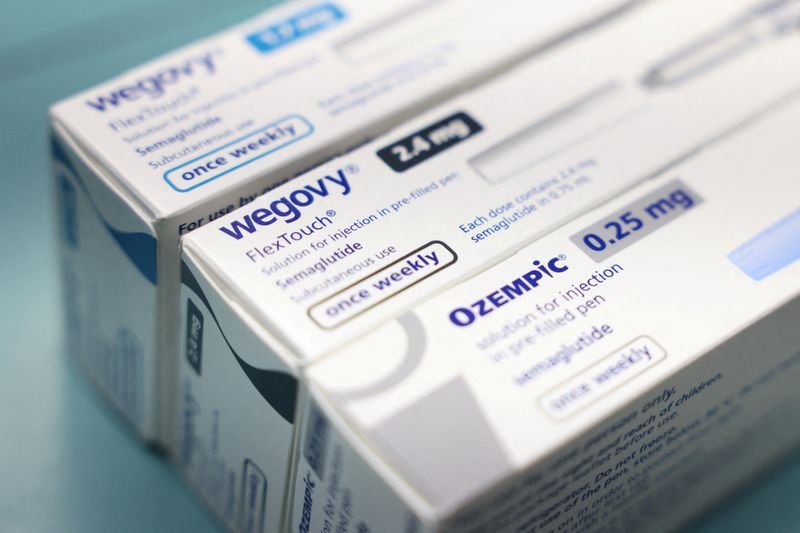
When Wegovy launched in 2021 and Lilly followed with its rival Zepbound in 2023, monthly prices hovered around $1,000. Today, amid political scrutiny and a growing shift toward out-of-pocket payment, both drugs are available directly from company websites for as little as $149 to $299.
Novo says early demand for its newly launched Wegovy pill has exceeded expectations, but the company has had to reassure investors that lower prices will not permanently erode margins. “Bear with us,” was the message from management this week.
“We’re optimistic about the future,” Doustdar told reporters. “But in the short term, pricing reductions do take a toll on our financials.”
Competitive Data Favors Lilly—for Now
Prescription data highlights the challenge. According to figures from IQVIA, Zepbound injections reached roughly 469,000 prescriptions in the week ending January 23, compared with about 257,000 total prescriptions for Wegovy’s injection and pill combined.
Clinically, Zepbound’s injection has shown stronger weight-loss results than Wegovy’s injectable version. However, Novo’s pill has outperformed Lilly’s own oral candidate in trials—a product Lilly expects to receive regulatory approval in April.
Investor Doubts Grow
Some shareholders who initially welcomed Doustdar’s aggressive response to weak U.S. performance are now questioning how much strain the strategy will place on the business.
“Novo already warned that the volume story would take time,” said Lukas Leu, a portfolio manager at ATG Healthcare, a Novo shareholder. “But the scale of this pricing pressure has surprised everyone.”
Novo’s CFO Karsten Munk Knudsen acknowledged the trade-off, telling analysts that while lower prices are driving prescription volumes, it is the decline in pricing that is expected to weigh on U.S. sales this year.
A Crowded GLP-1 Future
Both Novo and Lilly are still valued by markets as if the obesity drug space will remain a long-term duopoly. But that assumption is being tested. Competition is intensifying, consumer sensitivity to pricing is rising, and alternative options are proliferating.
“GLP-1s are going to become a very crowded space,” said Luke Miels, CEO of GSK, noting that his company is focusing instead on obesity-related conditions such as liver disease.
Beyond compounded versions of GLP-1 drugs—used by an estimated 1.5 million Americans—new challengers are on the horizon. Major pharmaceutical players including Pfizer and Amgen could enter the market as early as 2028.
Analysts warn that aggressive discounting may be especially risky for Novo given its current position behind Lilly. “Price cuts make sense when you’re the clear market leader,” said Bernstein analyst Courtney Breen. “They’re far harder to justify when you’re losing share and already seeing year-on-year declines.”
Doustdar, however, remains firm. Higher volumes, he insists, will ultimately validate the strategy. “By year-end, we’ll be producing far more units than before,” he said. “That’s growth—even if it doesn’t look pretty at first.”
