
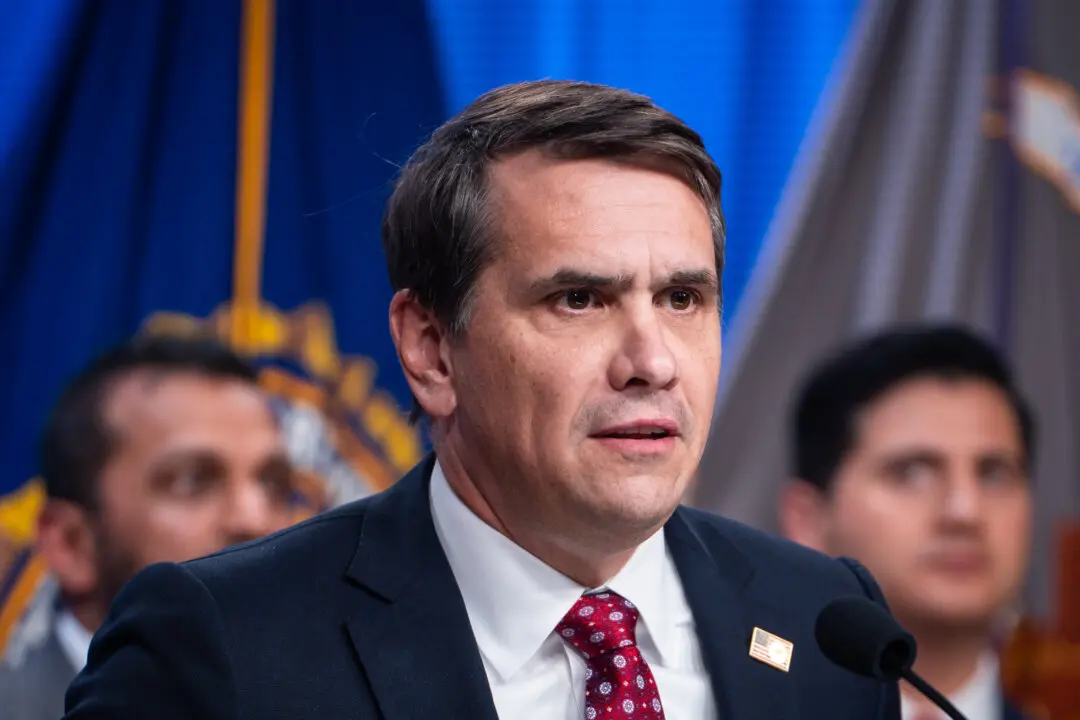
U.S. Deputy Attorney General Todd Blanche sought to lower the temperature surrounding a deadly Border Patrol shooting in Minnesota, saying the incident does not appear to meet the legal threshold for domestic terrorism. Speaking Monday on Fox News’ Fox & Friends, Blanche emphasized that Blanche says the shooter’s actions likely do not qualify as domestic terrorism, despite strong claims made by other federal officials.
“I don’t think anybody believes what happened on Saturday matches the legal definition of domestic terrorism,” Blanche said. He acknowledged that the encounter involved serious violence but cautioned against drawing conclusions before all the facts are known. “What we saw was a very violent altercation, and I am not going to prejudge the facts,” he added.
Under federal law, domestic terrorism involves acts intended to intimidate or coerce civilians, influence government policy through fear, or affect government conduct through extreme measures such as mass destruction, assassination, or kidnapping. Blanche’s comments suggest that, based on what is publicly known, the Minnesota incident does not clearly fall within that framework.
His remarks stand in sharp contrast to statements from Homeland Security Secretary Kristi Noem, who described the shooting death of Alex Pretti as an act of domestic terrorism. Noem said Pretti approached federal agents with weapons and ammunition in an apparent attempt to disrupt a law enforcement operation. “When you perpetuate violence against a government for ideological reasons, that is the definition of domestic terrorism,” she told reporters over the weekend.
According to the Department of Homeland Security, Pretti was shot after moving toward Border Patrol officers while carrying a 9mm semiautomatic handgun. Officials did not clarify whether the weapon was pointed at agents. Videos circulating online show Pretti holding an object while struggling with officers, but his family disputes the government’s account. In a statement shared by Sen. Bernie Sanders, the family said Pretti was not holding a gun, claiming he had his phone in one hand while the other was raised.
The shooting has fueled political backlash and renewed tensions over immigration enforcement. Democratic officials have called the killing unjustified and are urging the Trump administration to halt its operations in Minneapolis. On Capitol Hill, Democrats have signaled they may block funding for the Department of Homeland Security ahead of a late January deadline, raising the prospect of a government shutdown.
Senate Minority Leader Chuck Schumer said Senate Democrats would not support any spending package that includes DHS funding without stronger oversight of immigration enforcement. He argued that proposed legislation fails to adequately rein in Immigration and Customs Enforcement, vowing to vote against it.
As protests intensified over the weekend, Minnesota Gov. Tim Walz activated the National Guard to assist local police. Demonstrations had already been escalating following the earlier death of Renee Good, another incident involving federal agents. Trump administration officials say Good attempted to drive her vehicle toward an agent during a traffic stop, a claim that has also been disputed by critics.
President Donald Trump has used the unrest to criticize Minnesota’s leadership, accusing state and local officials of obstructing federal immigration enforcement. In social media posts Monday, Trump announced he was sending border czar Tom Homan to Minnesota and alleged widespread welfare fraud in the state, claims he linked to the ongoing protests.
As investigations continue and competing narratives clash, the Minnesota shooting has become a flashpoint—raising urgent questions about the use of force, the definition of domestic terrorism, and the deep political divisions shaping the national debate over immigration and law enforcement.
