
The future of North America’s shared air defense could be reshaped if Canada steps back from its commitment to buy U.S.-made fighter jets, according to a warning from Washington. In a blunt message to Ottawa, the U.S. ambassador to Canada signaled that long-standing military arrangements may not remain the same if the deal unravels — a development captured in the phrase Trump envoy warns Ottawa that NORAD pact could shift if Canada exits F-35 agreement.
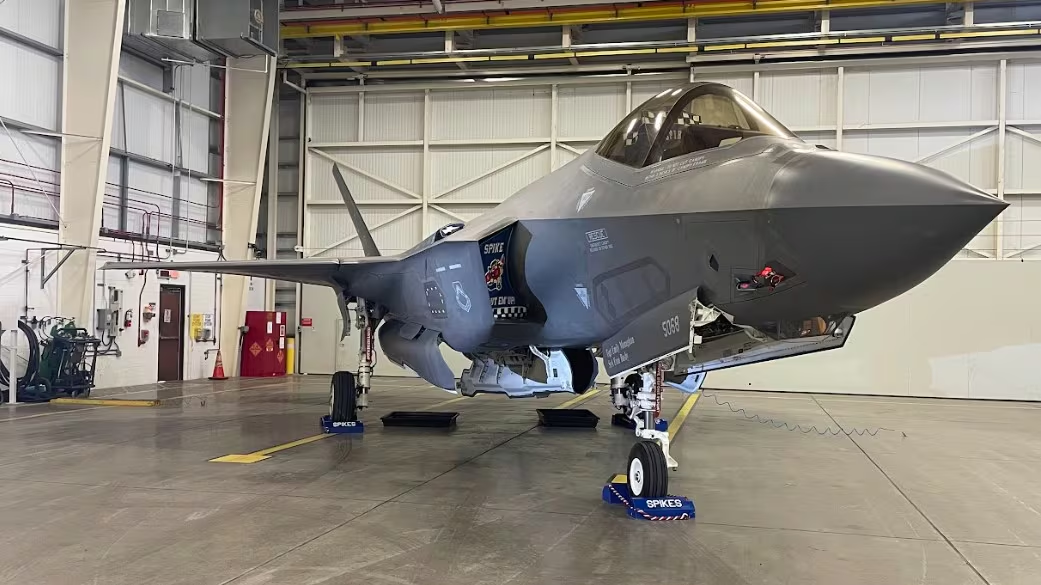
U.S. Ambassador Pete Hoekstra said the North American Aerospace Defense Command (NORAD) would need to be reworked if Canada does not proceed with its planned purchase of 88 F-35 fighter jets. Speaking in a Jan. 26 interview with CBC News, Hoekstra made it clear that Canada’s role in continental defense is closely tied to its aircraft capabilities.
“If Canada doesn’t move forward, NORAD would have to be altered,” Hoekstra said, explaining that the United States would likely have to compensate by buying additional jets for its own air force and increasing patrols in Canadian airspace.
According to Hoekstra, the defense partnership between the two countries remains strong, but practical realities would force change. If Canada limits its fleet to the 16 jets it has already paid for, U.S. aircraft would be required to cover capability gaps Canada would no longer fill.
NORAD, established in 1957, is a binational command responsible for monitoring aerospace threats and scrambling fighter jets from either country when necessary. Its effectiveness depends heavily on seamless coordination and compatible equipment on both sides of the border.
In 2023, Canada finalized a $14.2 billion agreement to acquire 88 Lockheed Martin F-35 fighter jets through a deal with the U.S. government. Two years later, however, Ottawa announced it was reviewing the purchase, floating the possibility of replacing part or all of the order with European-made aircraft such as Sweden’s Gripen jet.
Hoekstra criticized that idea, warning that moving away from the F-35 would weaken joint defense readiness. He argued that alternative aircraft lack the same level of interoperability, making it harder for Canadian and U.S. forces to operate as a single, integrated unit.
“If they choose an inferior product that doesn’t integrate the same way, that directly affects our shared defense capability,” Hoekstra said. “We then have to figure out how to replace what’s lost.”
The comments come amid broader diplomatic tensions between Washington and Ottawa, driven largely by concerns over Canada’s increasingly close engagement with China. Over the weekend, U.S. President Donald Trump sharply criticized recent Canada–China agreements, calling them disastrous and accusing Beijing of gaining undue influence over Canada’s economy.
In a Jan. 25 post on Truth Social, Trump claimed Canada was “systematically destroying itself” through its China deal, adding that businesses were leaving for the United States. In a follow-up post, he said China was “successfully and completely taking over” the country. Trump also warned that if Canada pursued deeper trade ties with China, the U.S. could impose 100 percent tariffs on Canadian exports.
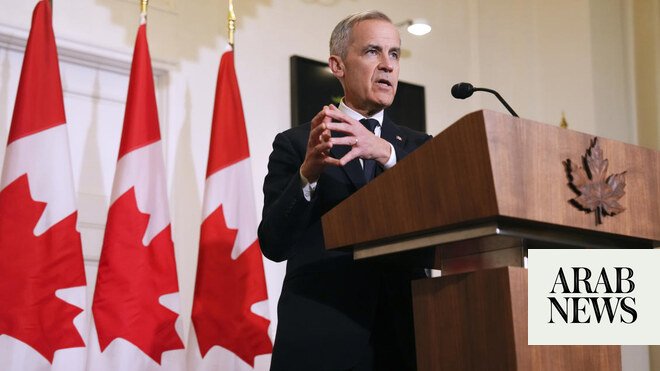
Earlier this month, Canadian Prime Minister Mark Carney visited China and signed several agreements with Beijing. These included a deal reducing Canadian tariffs on a limited number of Chinese electric vehicles in exchange for temporary relief on Chinese tariffs targeting Canadian canola. While in China, Carney described the relationship as a “strategic partnership” and said it marked a “new era” that positioned Canada well in a changing global order.
Back in Canada, Carney pushed back against Trump’s tariff threat, insisting Ottawa has no plans to negotiate a free trade agreement with China. He emphasized that Canada is bound by commitments under the United States–Mexico–Canada Agreement, which restricts trade deals with non-market economies without prior notice.
“We have no intention of doing that with China or any other non-market economy,” Carney said, adding that recent discussions with Beijing were aimed at resolving outstanding trade issues rather than redefining Canada’s economic alignment.
Still, as defense, trade, and geopolitics collide, the warning from Washington underscores how closely Canada’s military choices are tied to its broader relationship with the United States — and how a shift in fighter jets could ripple all the way through NORAD itself.
